All Saints’ Sunday, Year A
Preached on November 1, 2026 by the Rev. Pierre-Henry Buisson, Rector
When I was a child growing up in France, I heard many stories about the saints, and their statues stood all around me in church. They stood above us on their pedestals, looking very holy and unreachable. I admired their faith and their deeds, but they reminded me how small my own faith was! I thought they were special and very different from me and the rest of us.
Yet the first Christians called the ordinary members of their communities saints. It is one detail I love in Paul’s letters: he writes to the saints in Rome, to the saints in Philippi, to the saints in Corinth. For Paul, the saints were simply his brothers and sisters in Christ. If Paul were with us today, he would begin his letter: “Greetings to the saints of St. Peter’s!”
So this morning, the question is not only who were the saints? It is also who are we?
In today’s Gospel, Jesus sees the crowds, goes up the mountain, and sits down, like Moses on Sinai, like a teacher about to give the heart of his teaching. And his first words are: “Blessed are the poor in spirit.”
“Blessed” is a good translation. But the word Jesus uses, makarios, also means happy or fortunate. A few English Bibles use “Happy are…”, and the Prayer Book uses that same word in this morning’s psalm: “Happy are they who trust in him!” In French, we say heureux, or bienheureux. And on this day, that word touches me, because in French the saints in heaven are called les bienheureux.
So when you hear “blessed” in the Beatitudes, hear “happy” too, or “how fortunate!” In fact, the very name we give these sayings already tells us: “Beatitudes” comes from the Latin beatus, happy. There is a dimension of deep joy in this word, a fullness of life, that we can easily miss when we say “blessed.” Jesus himself ends the Beatitudes with a command: “Rejoice and be glad.”
But then Jesus’ words surprise us. Happy are the poor in spirit? Happy are the meek, in a world where the strong seem to win? Happy are those who hunger and thirst for justice, when justice is so slow to come? How fortunate are those who mourn, or those who are persecuted?
Jesus knows the reality of our lives. Here he is not telling us how to feel or setting conditions we must meet before God will bless us. He does not say, “Try harder to be poor in spirit, and then you will be blessed.” He declares. He announces good news. He looks at people in very concrete situations, poor, grieving, hungry for justice, merciful, making peace, and he announces that the happiness of God’s kingdom belongs to them. Each beatitude carries a promise: the kingdom of heaven, comfort, being filled, mercy, seeing God, being called children of God. Makarios is not first a feeling. It is a life held in God’s promise, and joy grows from there, a joy that can live alongside our hunger, our struggles, and even our tears.
Those whom Jesus calls happy are not the people our world usually celebrates. Our world looks for happiness in wealth, power, or success. Jesus shows us where true happiness is found. And if we listen closely, we realize that the Beatitudes are a portrait. A portrait of Jesus himself. He is the meek one, the merciful one, the pure in heart, the peacemaker, the one persecuted for righteousness. The saints are simply the people in whom we recognize something of his face.
So where are we in this story? Some of us came to church this morning carrying grief. Perhaps this is the first All Saints’ Day without someone you love. Jesus does not tell you that grief is good. He tells you that you are not abandoned: “Blessed are those who mourn, for they will be comforted.”
The book of Revelation shows us what that comfort looks like. John sees “a great multitude that no one could count, from every nation, from all tribes and peoples and languages,” standing before the throne, robed in white, with palm branches in their hands. They are the ones “who have come out of the great ordeal.” The saints are not those who escaped suffering. They are those who came through it, held by the Lamb.
And then come the promises: “They will hunger no more, and thirst no more… the Lamb at the center of the throne will be their shepherd… and God will wipe away every tear from their eyes.” Do you hear it? Those who hunger will be filled. Those who mourn will be comforted. Revelation shows us the Beatitudes fulfilled. What Jesus promised on the mountain, John sees completed before the throne.
But the saints are not only a vision of the future. Saint John writes in his first letter: “See what love the Father has given us, that we should be called children of God; and that is what we are.” Not someday, if we behave. That is what we are, now.
And he adds: “What we will be has not yet been revealed.” We are children of God, and we are works in progress. Both are true at once. The saints are saints not because of what they did, but because of who they are: beloved children of God. Not because of what they did, but because of what God did in them and through them, over a lifetime.
Where does this begin for us? In baptism, we were joined to Christ, sealed by the Holy Spirit, and marked as Christ’s own for ever. We were welcomed into a family that stretches across generations and across the world. And today, instead of the Nicene Creed, we renew our commitment to live as members of that family: to love and serve, to seek justice and peace, and to return to the Lord whenever we fall.
And as we renew those vows, we will say together: “I believe in… the communion of saints.” That is not only a pious memory of people long gone. It is a living bond. In Christ, the Church on earth and the Church in heaven are one family. Death has not broken that bond.
We touch it every Sunday at this altar. When we pray the Great Thanksgiving, we join our voices “with Angels and Archangels and with all the company of heaven.” The table is much bigger than this room. Those we love but see no longer are not absent from it. They are already seated at the banquet, and every Eucharist is a foretaste of the feast where we will sit with them again.
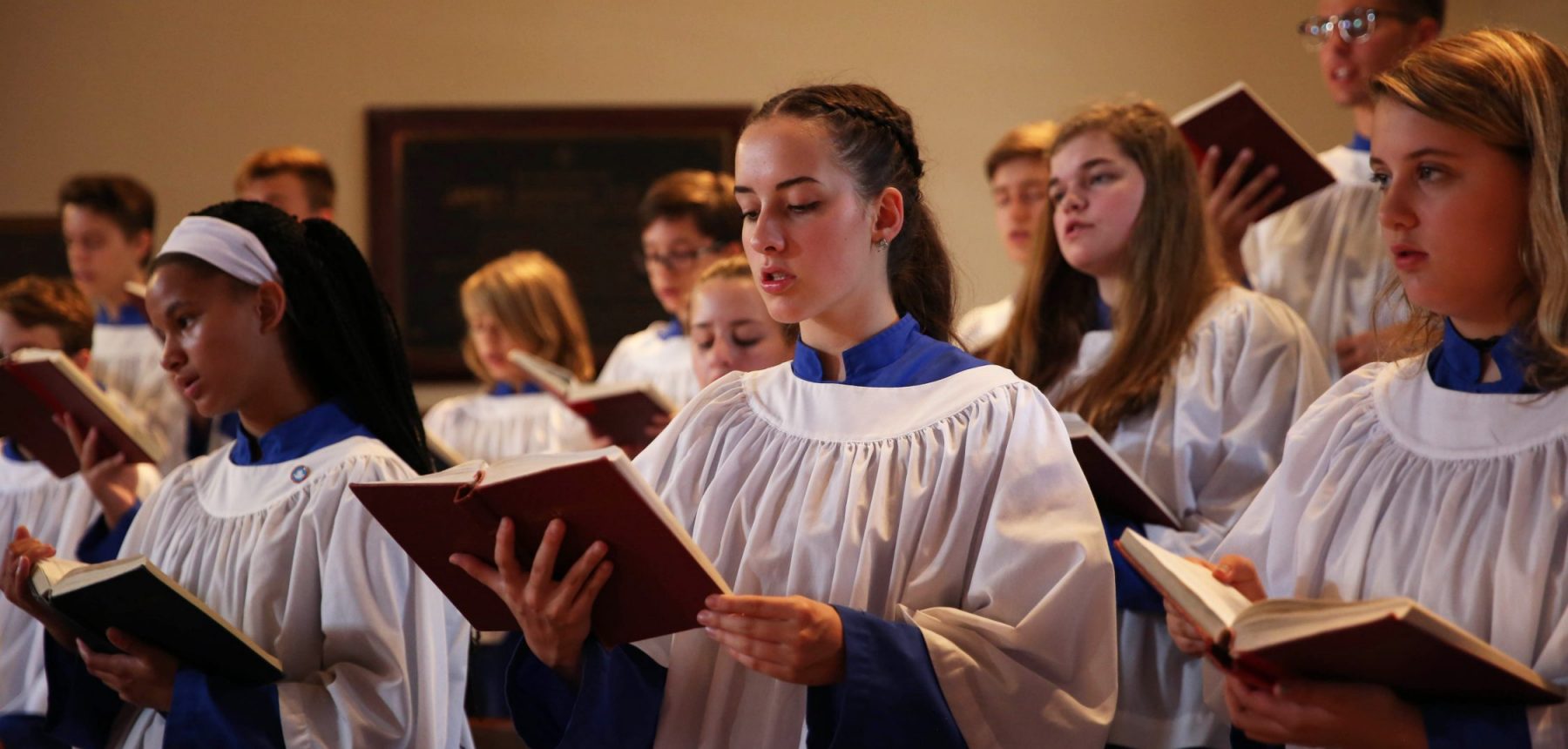
Every one of us came to this table because someone set it before we arrived. The saints of St. Peter’s prayed, served and gave for people they would never meet. They did it for us. So this morning, look at the people sitting around you. Ordinary people, with gifts and weaknesses, joys and sorrows. People whom God loves. People through whom God is already working. Be glad and rejoice: you are the saints of today.
In a few moments, we will renew the promises of our baptism. Can we live those promises perfectly? We know ourselves too well to say yes to that! But can we keep following Christ? Can we return when we fall? Can we allow God to work in us and through us? Of course we can, but not by ourselves. Together with all the saints, we give our answer: “I will, with God’s help.”
Blessed are you! Rejoice and be glad, because you are God’s own beloved children. Amen.